I have been discussing notable ladies who print. Remember, printmaking consists of A LOT of techniques. This can be overwhelming if you don’t have a jumping off point or if people are discussing the techniques and you don’t know what the heck they are talking about. So, I thought I would share some of my ‘go to’ techniques and share some knowledge about printmaking techniques.
I suggest signing up for a class at a local college or at your community center if you are interested in learning how to do some printmaking. My local community center offers various classes throughout the year like screen printing, cyanotype, and linocut.
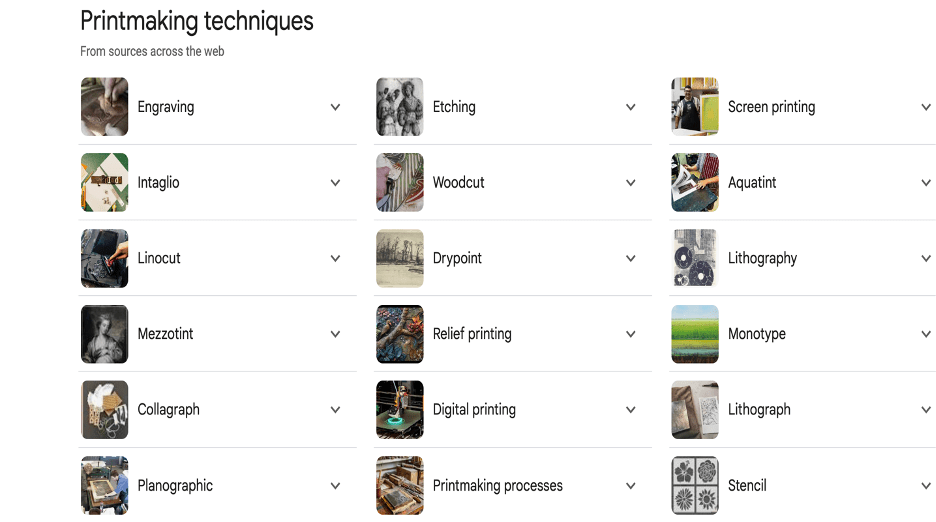
Like I mentioned here is a list of the different techniques (it’s a long list) and I haven’t even begun to dive into them all. It is super cool to think about trying and learning about them all.
Some of these are more complicated and involved than others. For example, lithography is the most difficult due to chemicals and lengthy process. I have seen it done at the SGCI Printmaking Conference at the Rhode Island School of Art and Design which was a great experience, but I am still intimidated by it and am yet to give it a try. Lithography is best suited for a professional studio although some braver folks do attempt in their home studios.
– Lithography introduction
My go to techniques…
- Monotype
- Linocut
- Collagraph
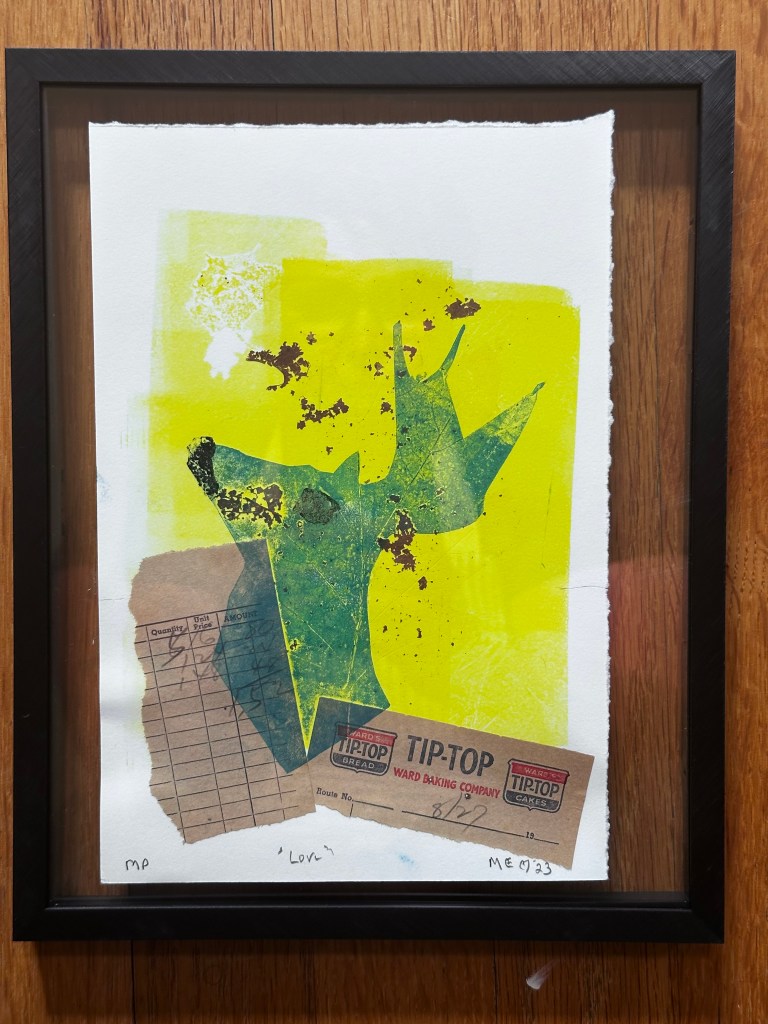
Monotype is the “gateway” printmaking technique, as it is very approachable. I made my first monotype in a Printmaking 1 course at Wake Tech in 2022. This course changed me as an artist and now printmaking is a huge part of my art practice. I already loved collage and using mixed media which made monotype a good jumping off point for printmaking.
Here is an intro to monotype by Liz Bannish at the Center for Contemporary Arts …
Monotype can be done at home and without purchasing a lot of materials. It is also the most forgiving and allows for the most “play.” Even the mess ups are art and look cool.
This is my favorite technique right now because I am able to “play”, incorporate collage elements, sewing, and use Connie my Conrad Press to get a good print. Reminder you don’t need a press to make monotype. You can use the tools below to get a great print!
Essential Tools:
- Printing Surface: Plexiglass, glass, or a non-absorbent surface to apply ink to.
- Printmaking Ink or Paint: Oil-based, water-based, or acrylic paints can be used.
- Brayer: A roller used to evenly apply ink to the printing surface.
- Paper: Printmaking paper (like Rives BFK or Arches) or other sturdy paper.
- Mark-Making Tools: Brushes, cotton swabs, chop sticks, pencils, or any object to create textures and shapes in the ink.
- Cleaning Supplies: Rags, paper towels, and a cleaning solution (like diluted dish soap).
- Baren or Spoon: Used to transfer the inked image to the paper.
Linocut is a design or form carved in relief on a block of linoleum.
a print made from a linocut.
Here is an intro to Linocut which I also love doing. This process is super relaxing and allows the mind to settle which I need help with from time to time.
Essential Tools:
- Linoleum (or SoftCut): The block of material you carve your design into.
- Cutting Tools: A set of tools with various blade shapes (V-shaped, U-shaped, knife) for carving the linoleum.
- Ink: Specialized block printing ink or water-based printing inks.
- Brayer (Roller): Used to evenly apply ink to the carved linoleum.
- Paper: Suitable for printing, often smooth cartridge paper.
- Surface to Print On: A flat, sturdy surface to work on, such as a table.
Collagraph is a printmaking technique where materials of varying textures are glued to a substrate, like cardboard or wood, to create a printing plate. This textured plate is then inked and used to create prints on paper or other surfaces
It is important to know that while printmaking can be expensive but doesn’t have to be. There are so many ways to be a printmaker. Each having their own set of tools, skills, and outcomes.
It is also an art form that takes time to learn; so be patient with yourself, be precise until you are ready to play and break the rules and have fun!
Until next time on @glasscanvas!
Instagram – @heartmailstudios & @heartsonwalks
See you soon – M.E
#heartsonwalks #vancouver @heartsonwalks
 Heartmail Studios
Very useful. I will need to read it several times to get a better understanding Love Nana xx 😘 ❤️
LikeLike